Case study · Educational game
Monkey Business
An educational team leadership game
A four-month project commissioned by Excited, the Centre for Excellent IT Education in Norway. Monkey Business is a 2D point-and-click management game where players delegate tasks, decide how to run meetings and apply the team leadership theories they have learnt. We did the programming in Unity and C#; the art and story were created by a collaborator.
- Client
- Excited – Centre for Excellent IT Education
- Published
- August 2024, after four months of work
- Platform
- Web browser (WebGL), desktop and mobile
- What we did
- Programming in Unity and C#
- Award
- Best Digital Student Game, 19th European Conference on Games Based Learning
The brief
Excited wanted a serious game that helps university students practise leading a team, not just read about it. The theory had to show up in what players do, so that a good leadership decision visibly helps the team and a poor one costs them.
It also had to be easy to hand out: no installs, no accounts, and playable on whatever device a student has with them.
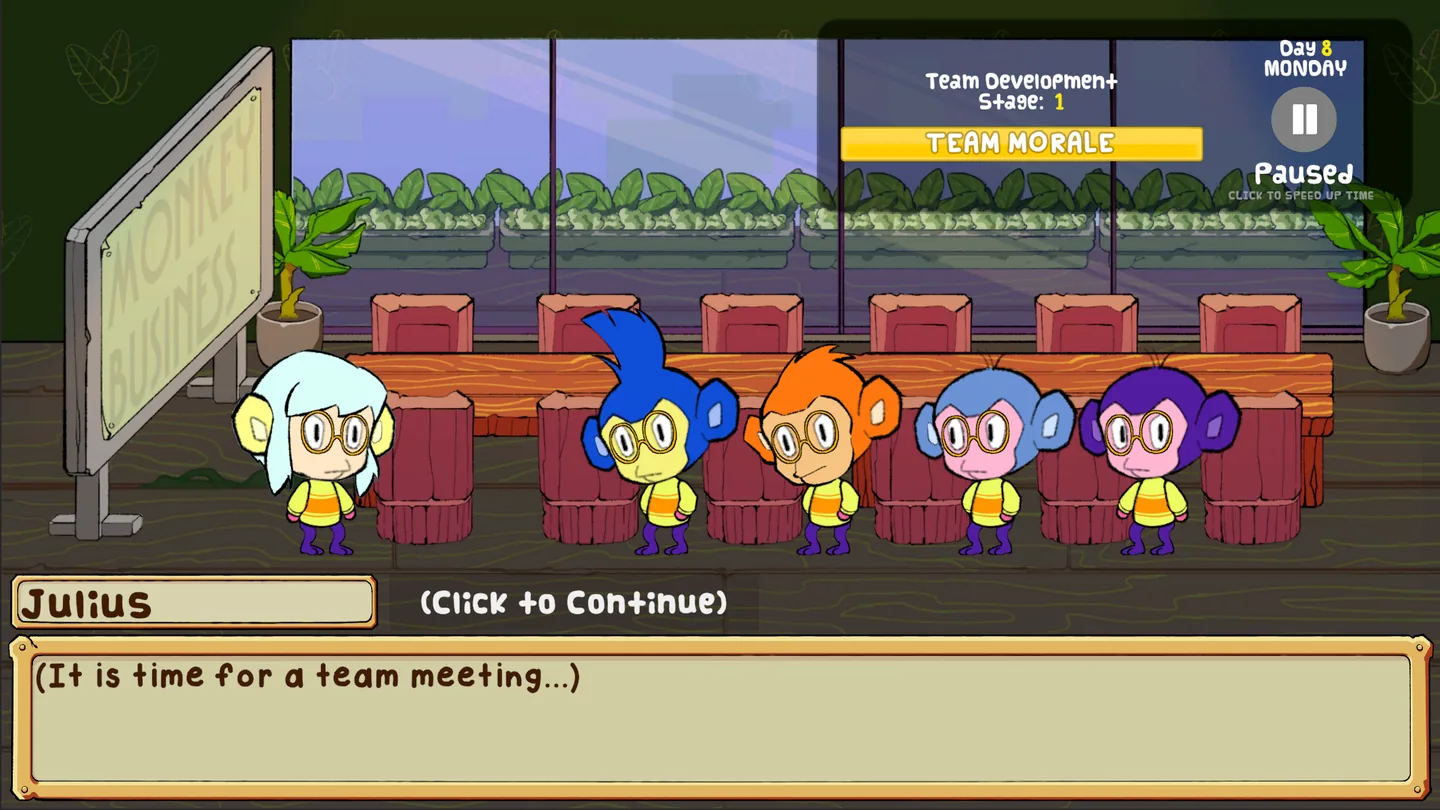
Gameplay: running an office of monkeys
Players take charge of a small team, give out work and keep an eye on how everyone is coping as the days go by.
- A short personality quiz sets the player’s own skills in programming, art, design and audio.
- Full character customization, then hiring a team whose skills fit the project.
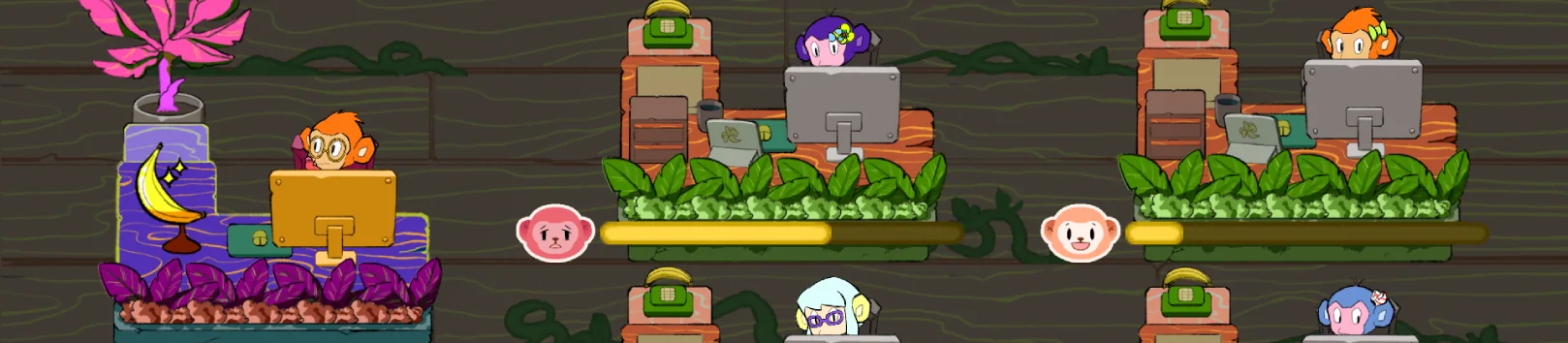
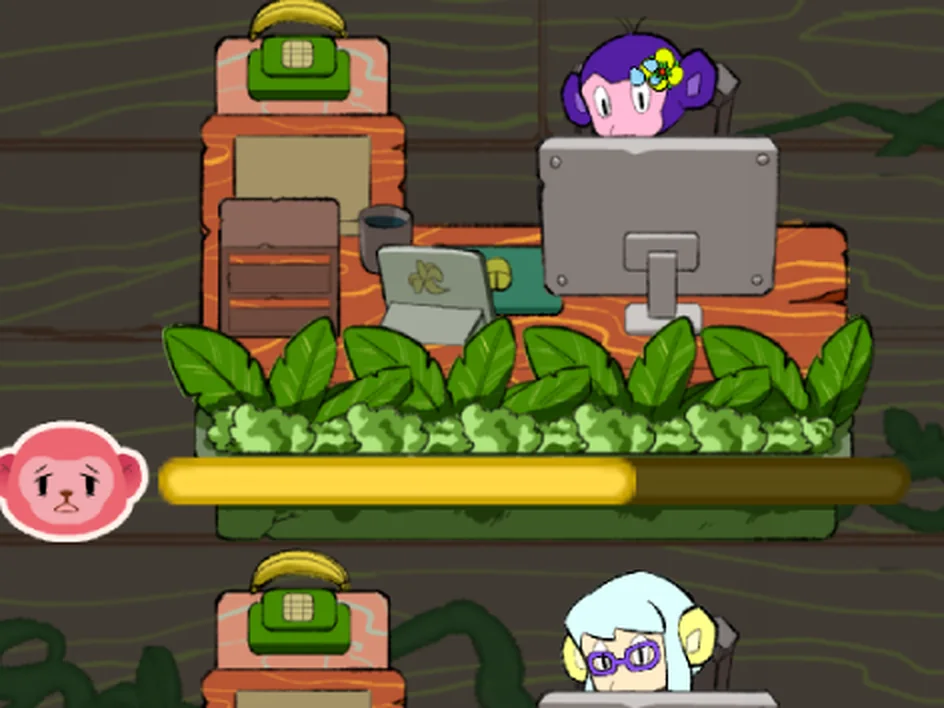
- Tasks are dragged onto employees from an in-game laptop. Too many at once and stress climbs while productivity drops.
- Team meetings and executive meetings check progress and move the story forward.
Theory built into the rules
The game is based on real team effectiveness theories: the Thomas-Kilmann Conflict Model (1974) and the Four Leadership Styles of Situational Leadership II® in a Group or Team Context (1969).
- The team moves through four development stages, and each stage calls for a different meeting approach: structuring, resolving, collaborating or validating.
- The right approach lowers stress and moves the team up a stage, and every stage makes the team more productive.
- In-depth optional tutorials and examples drawn from real-life scenarios.

Programming: what we built
- A simulation where every employee’s skills, workload and stress decide how fast their tasks get done.
- A branching dialogue system, with conversations stored as assets so the story could be written and changed without touching code.
- A day and time system you can pause and speed up, plus weather, a team overview with statistics, and colour themes for the in-game laptop.
- A character creator that builds each monkey from layered sprite parts.
- Separate volume controls, adjustable text speed and a WebGL build that works on phones as well as computers.
Built with
Programming by AEDANI Studio. Art and story by a collaborator.
Need a game that teaches?
We build serious games, simulations and interactive tools for schools, universities and businesses, and make them run in the browser. Tell us about your project.